Doings of Learned Stupidities
(Eruditarum Stultitiarum Acta) We've been doing this for more than five years, but we lost the first year or so of archives. Frightening...

- It Seems the Rumors Were True A great investment ...
- In Which Peer Review Saves My Butt So there's thi...
- I Think I Can Vote for Barack Obama Of course, ...
- Trying to Fix the Comments on this Blog My goal f...
- Hillary Wins in NH I was discussing the possibili...
- Live From Manchester, It's the New Hampshire Deba...
- Iowa Caucuses One of my colleagues asked me yester...
- Abierto After nearly eleven months of no posting,...
- I Miss Scav I was re-reading my Judge's applicati...
- If You'll Handle Statutory Interpretation, I'll K...

- 02/01/2003 - 03/01/2003
- 03/01/2003 - 04/01/2003
- 04/01/2003 - 05/01/2003
- 05/01/2003 - 06/01/2003
- 06/01/2003 - 07/01/2003
- 07/01/2003 - 08/01/2003
- 08/01/2003 - 09/01/2003
- 09/01/2003 - 10/01/2003
- 10/01/2003 - 11/01/2003
- 11/01/2003 - 12/01/2003
- 12/01/2003 - 01/01/2004
- 01/01/2004 - 02/01/2004
- 02/01/2004 - 03/01/2004
- 03/01/2004 - 04/01/2004
- 04/01/2004 - 05/01/2004
- 05/01/2004 - 06/01/2004
- 06/01/2004 - 07/01/2004
- 08/01/2004 - 09/01/2004
- 09/01/2004 - 10/01/2004
- 10/01/2004 - 11/01/2004
- 11/01/2004 - 12/01/2004
- 12/01/2004 - 01/01/2005
- 01/01/2005 - 02/01/2005
- 03/01/2005 - 04/01/2005
- 04/01/2005 - 05/01/2005
- 05/01/2005 - 06/01/2005
- 06/01/2005 - 07/01/2005
- 07/01/2005 - 08/01/2005
- 08/01/2005 - 09/01/2005
- 09/01/2005 - 10/01/2005
- 10/01/2005 - 11/01/2005
- 11/01/2005 - 12/01/2005
- 12/01/2005 - 01/01/2006
- 01/01/2006 - 02/01/2006
- 02/01/2006 - 03/01/2006
- 03/01/2006 - 04/01/2006
- 05/01/2006 - 06/01/2006
- 06/01/2006 - 07/01/2006
- 07/01/2006 - 08/01/2006
- 08/01/2006 - 09/01/2006
- 09/01/2006 - 10/01/2006
- 10/01/2006 - 11/01/2006
- 11/01/2006 - 12/01/2006
- 02/01/2007 - 03/01/2007
- 01/01/2008 - 02/01/2008
- 02/01/2008 - 03/01/2008
- 03/01/2008 - 04/01/2008
- Current Posts

Subscribe to
Posts [Atom]
Josh the Mathematicist-Guitarist
Kristy the Geologist-Oregonian
Alice the Cambrian Medievalist from San Francisco
Anna From the Land of Sprinklers
Ian, Man of Many Hats or Amicable to Haberdashers
The Ursine Ecologist of the Blogosphere
-->
Friday, April 22, 2005
Tuesday, April 19, 2005
After Prayers, We Meditated Further While Picking Grains of Erionite
The reason for the last post was half-humorous and half-serious. Ratzinger's (Benedict XVI's (it's going to take some time)) first request was for prayers, and I find it easier to pray in Latin than in English these days, because in English, my brain tends to skim. With Latin, I read at just the right pace to mean earnestly what I am saying.
The first question everyone must be asking (Acousmatist-Logopoet especially) is why is an Anglican so obsessed with the papal election. Admittedly, the Economist proposed than an Anglican be elected Pope, but what should one expect from an English publication that supports the welfare of the homo oeconomicus before all else? I'll answer indirectly.
First, I can't say I was pleased to hear of the election on first instinct. But I know that the Spirit blows where it wills and I can't just say to God, let my concerns alter the fullness of your plans. But honestly, I can't immediately cheer the apostolopoesis of a man who directly has encouraged schism within my church (googling "Ratzinger and Plano meeting" should bring up the right stuff) . I feel like Paul. I love Peter. Sometimes, I even like him, but I will be tempted to speak anathemas against anyone who brings what he believes into my churches in Asia. Of course, there's selfishness in Paul and me. The Church belongs to Christ, but Paul at least had the right to fight Petrine error.
To some extent I can sympathize with the current Roman Catholic position on ecumenical dialogue in the midst of the present ecclesiological, sexual ethical, and nearly Christological controversy in the Anglican Communion. No one wants to talk to anyone who is speaking out of both sides of his mouth or any group that is doing likewise. The Communion should speak with one voice and until that time, it may be pointless for the Byzantines and the Latins to talk with us.
But Ratzinger's encouragement to the dissidents in the American church is tacit encouragement to the Dominionists who believe in a broadly applied death penalty, though I am sure Ratzinger simply does not know some of their ideological underpinnings. It also encourages the very kind of ecclesiastical defiance that Ratzinger wouldn't want in his own church. For Episcopalians, whether it is right in this or not, General Convention is our source of Magisterium. By basically saying to the ACC/Network/FiF/Dominionist Cabal that the Doors of Rome always are open to you, Ratzinger may be welcoming people with a great deal of trouble with authority and a tendency to use large amounts of cash and the legal system to subvert authority. By entering into the crisis, Ratzinger has made himself an honorary Anglican (because he essentially has interfered in dioceses not under his own authority and offered faculties, the Anglican Rite, and alternative episcopal jurisdiction to the dissidents, especially if he uses the Chair of Peter to further his influence.) Peter Akinola and Robert Duncan have acted likewise.
That said, I must thank God for the election of Benedict XVI, because God is ever good. And as I was instructed in school, I must seek the good in every person, the Inner Light that enlightens the whole world. In this light, I see a man with firm principles that are strongly against relativism and "modernism." While I find the latter crusade based on somewhat erroneous principles, I must praise anyone who is committed to the value of the Christian faith and the Western Canon even to the point of quiet fanaticism. It is courageous and noble. It makes people say what they really think and make sure what they really think is said in their name, and makes their actions clear. Indeed, the best among such people act with their entire being. If it produces a narrowness in view, the very authenticity of word and action makes their limited scope apparent and easier to critique. I just pray he listens, not necessarily to the slew of whiny complaints he is sure to hear, but to the earnest attempts some hopefully will make to ask if his faith truly seeks the mind of Christ.
Second, Ratzinger is a scholar of great renown, not only an esteemed colleague of some of the finest Catholic theologians of recent years but a theological giant in his own right. Of course, I disagree with him, but I feel he now more than ever is worth reading. Between John Milburn and Joseph Ratzinger, I will have a full reading list for some time (and the celestial spheres will take up most of my time, God willing, for the rest of my life). His dissertation subjects were Augustine and Bonaventure, both of whose musings on the unity of truth are at the foundation of the theological tradition with which I seek to identify myself. As a scholar, he feels like a crusty great-uncle. I shout at Augustine all the time. Ratzinger will get some shouting, too.
Third, most of the Catholics I know my age either will love and agree with Benedict XVI or will love and still disagree with Benedict XVI. They deserve a connection with the Pope in both Word and Sacrament, as they had with John Paul II.
ESA(20050419.2)
P.B. I have a lot of work and stuff to do now, so please talk among yourselves. And if some people are feeling they raised a religious fanatic who spends a lot of time dealing with the Church and not enough with Jesus, please be assured that I will be doing some Jesus work on Saturday (and speaking from the heart more, too.)
The reason for the last post was half-humorous and half-serious. Ratzinger's (Benedict XVI's (it's going to take some time)) first request was for prayers, and I find it easier to pray in Latin than in English these days, because in English, my brain tends to skim. With Latin, I read at just the right pace to mean earnestly what I am saying.
The first question everyone must be asking (Acousmatist-Logopoet especially) is why is an Anglican so obsessed with the papal election. Admittedly, the Economist proposed than an Anglican be elected Pope, but what should one expect from an English publication that supports the welfare of the homo oeconomicus before all else? I'll answer indirectly.
First, I can't say I was pleased to hear of the election on first instinct. But I know that the Spirit blows where it wills and I can't just say to God, let my concerns alter the fullness of your plans. But honestly, I can't immediately cheer the apostolopoesis of a man who directly has encouraged schism within my church (googling "Ratzinger and Plano meeting" should bring up the right stuff) . I feel like Paul. I love Peter. Sometimes, I even like him, but I will be tempted to speak anathemas against anyone who brings what he believes into my churches in Asia. Of course, there's selfishness in Paul and me. The Church belongs to Christ, but Paul at least had the right to fight Petrine error.
To some extent I can sympathize with the current Roman Catholic position on ecumenical dialogue in the midst of the present ecclesiological, sexual ethical, and nearly Christological controversy in the Anglican Communion. No one wants to talk to anyone who is speaking out of both sides of his mouth or any group that is doing likewise. The Communion should speak with one voice and until that time, it may be pointless for the Byzantines and the Latins to talk with us.
But Ratzinger's encouragement to the dissidents in the American church is tacit encouragement to the Dominionists who believe in a broadly applied death penalty, though I am sure Ratzinger simply does not know some of their ideological underpinnings. It also encourages the very kind of ecclesiastical defiance that Ratzinger wouldn't want in his own church. For Episcopalians, whether it is right in this or not, General Convention is our source of Magisterium. By basically saying to the ACC/Network/FiF/Dominionist Cabal that the Doors of Rome always are open to you, Ratzinger may be welcoming people with a great deal of trouble with authority and a tendency to use large amounts of cash and the legal system to subvert authority. By entering into the crisis, Ratzinger has made himself an honorary Anglican (because he essentially has interfered in dioceses not under his own authority and offered faculties, the Anglican Rite, and alternative episcopal jurisdiction to the dissidents, especially if he uses the Chair of Peter to further his influence.) Peter Akinola and Robert Duncan have acted likewise.
That said, I must thank God for the election of Benedict XVI, because God is ever good. And as I was instructed in school, I must seek the good in every person, the Inner Light that enlightens the whole world. In this light, I see a man with firm principles that are strongly against relativism and "modernism." While I find the latter crusade based on somewhat erroneous principles, I must praise anyone who is committed to the value of the Christian faith and the Western Canon even to the point of quiet fanaticism. It is courageous and noble. It makes people say what they really think and make sure what they really think is said in their name, and makes their actions clear. Indeed, the best among such people act with their entire being. If it produces a narrowness in view, the very authenticity of word and action makes their limited scope apparent and easier to critique. I just pray he listens, not necessarily to the slew of whiny complaints he is sure to hear, but to the earnest attempts some hopefully will make to ask if his faith truly seeks the mind of Christ.
Second, Ratzinger is a scholar of great renown, not only an esteemed colleague of some of the finest Catholic theologians of recent years but a theological giant in his own right. Of course, I disagree with him, but I feel he now more than ever is worth reading. Between John Milburn and Joseph Ratzinger, I will have a full reading list for some time (and the celestial spheres will take up most of my time, God willing, for the rest of my life). His dissertation subjects were Augustine and Bonaventure, both of whose musings on the unity of truth are at the foundation of the theological tradition with which I seek to identify myself. As a scholar, he feels like a crusty great-uncle. I shout at Augustine all the time. Ratzinger will get some shouting, too.
Third, most of the Catholics I know my age either will love and agree with Benedict XVI or will love and still disagree with Benedict XVI. They deserve a connection with the Pope in both Word and Sacrament, as they had with John Paul II.
ESA(20050419.2)
P.B. I have a lot of work and stuff to do now, so please talk among yourselves. And if some people are feeling they raised a religious fanatic who spends a lot of time dealing with the Church and not enough with Jesus, please be assured that I will be doing some Jesus work on Saturday (and speaking from the heart more, too.)
Habemus Papam, Benedictum Sextidecimum, Eminentissime Iosephum Cardinalem Ratzingerem, Decanum Collegi Cardinalium, Episcopum Ostiensis et Vellitrensis et Poenam in Tergibus Multorum (Ioco, Ioco)
Ad proprium tempus, recommendo vos addere hae orationi:
Pro salutibus et benevolentia mutua Benedicti, Patriarchi Occidentis; Bartolemei, Patriarchi Ecumenici; Michelis Sabae, Iraenaei, et Torkomi, Patriarchorum Ierusalemis; Rovanis Archepiscopi Cantauriae et omnium successorum apostolorum per omnes mundos
Te rogamus audi nos
Querulae de usu Latinae in poste hac aut de alteris causis mittantur ad:
Aulus Lactinus
Theologicus Peritus pro Eruditarum Stultitiarum Actis
Monachia Mirabilium Martyrorum Anglicorum [ SS. Carolus Martyr, Oliver Pluncettus, Guillamus Lauda, Thomas Moria, Nicolas Ridley, et Hugus Latimer ]
Prefecturus Palatinus, Tupile, Regio Tenurae
ESA(20050419.1)
Ad proprium tempus, recommendo vos addere hae orationi:
Pro salutibus et benevolentia mutua Benedicti, Patriarchi Occidentis; Bartolemei, Patriarchi Ecumenici; Michelis Sabae, Iraenaei, et Torkomi, Patriarchorum Ierusalemis; Rovanis Archepiscopi Cantauriae et omnium successorum apostolorum per omnes mundos
Te rogamus audi nos
Querulae de usu Latinae in poste hac aut de alteris causis mittantur ad:
Aulus Lactinus
Theologicus Peritus pro Eruditarum Stultitiarum Actis
Monachia Mirabilium Martyrorum Anglicorum [ SS. Carolus Martyr, Oliver Pluncettus, Guillamus Lauda, Thomas Moria, Nicolas Ridley, et Hugus Latimer ]
Prefecturus Palatinus, Tupile, Regio Tenurae
ESA(20050419.1)
Monday, April 18, 2005
More Swift Blogging Ideas From Blogs I Read
Nate recommends putting one's iPod into shuffle and listing the first ten songs that come up.
1. Hic Est Filius Dei--Taverner Consort, Choir, and Players (Composed by some 17th century Venetian guy)
2. "Pomp and Circumstance" Op. 39 March No. 4 in G, Sir Edward Elgar-- BBC Concert Orchestra (Last Night of the Proms Album from iTunes has some great stuff)
3. Sonata a 14--Taverner...
4. Chanson de Matin Op. 15, No. 2, Sir Edward Elgar-- BBC Concert Orchestra...
5. Fields of Gold--Sting
6. Audite Principes--Taverner...
7. The Wheat, Lisa Gerrard-- Gladiator Soundtrack
8. Sonata con Tre Violini--Taverner...
9. Papa--Vanessa Carlton, Harmonium
10. Let Go --Frou Frou, Details
Chuckle all you want...
ESA(20050418.2)
Nate recommends putting one's iPod into shuffle and listing the first ten songs that come up.
1. Hic Est Filius Dei--Taverner Consort, Choir, and Players (Composed by some 17th century Venetian guy)
2. "Pomp and Circumstance" Op. 39 March No. 4 in G, Sir Edward Elgar-- BBC Concert Orchestra (Last Night of the Proms Album from iTunes has some great stuff)
3. Sonata a 14--Taverner...
4. Chanson de Matin Op. 15, No. 2, Sir Edward Elgar-- BBC Concert Orchestra...
5. Fields of Gold--Sting
6. Audite Principes--Taverner...
7. The Wheat, Lisa Gerrard-- Gladiator Soundtrack
8. Sonata con Tre Violini--Taverner...
9. Papa--Vanessa Carlton, Harmonium
10. Let Go --Frou Frou, Details
Chuckle all you want...
ESA(20050418.2)
My Mother is a Brooklynite (but has moved a few times) and My Father from Waterbury (and has moved less)
But what I want to know is where people omit the "h" sound before "u" as in "humidity" and "humor."
ESA(20050418.1)
Your Linguistic Profile: |
55% General American English |
35% Yankee |
10% Dixie |
0% Midwestern |
0% Upper Midwestern |
But what I want to know is where people omit the "h" sound before "u" as in "humidity" and "humor."
ESA(20050418.1)
Thursday, April 07, 2005
Puritans, Latitudinarians, and Crypto-Catholics, Oh My
I begin my rant this morning with something Fred Barnes just wrote in The Weekly Standard about the Pope in which he calls +Frank and most of the rest of the American Anglican episcopate, "the great diluters of classical Christianity."
He also calls the Pope the greatest defender of orthodox, Biblically-based Christianity. Jack Chick, eat your lungs out!
I was angry with Fred for a few minutes, until I realized that goshdarnit, Barnes is right. Admittedly, I disagree with Barnes about what parts of the building are on fire, but he's right there's a fire. The Anglican Church is clearly coming apart at the seams. The stool of Richard Hooker's Ecclesiastical Polity is splitting into a leg of Scripture, a leg of "Reason", and a leg of Tradition (though the first and third seemed to have fused together in some places, explaining the instability in the stool in the first place). The ancient parties now stand forth to do battle: Puritans, Latitudinarians, and Crypto-Catholics.
Why I'm Scared (Or What Happens If One Side Wins):
Puritans Win: Bad days, pilgrims. The Puritans honestly believe scary things. +John Howe apparently believes that some people are children of the Devil rather than the children of God. Take him too literally and Anglican Christianity degenerates into a mutual benefit society of the exurbs that sweeps Dominationists into civil power.
Latitudinarians Win: Everything we know is wrong. Nothing is sacred. Anglican Christianity will "sanctify" the interiority of the urban elites, and they still will make fun of it. Repeat after me: I want my bodily resurrection from the dead! I want to be sinful and be held accountable for it! I don't want to be told what to do, but I would appreciate some suggestions!
Crypto-Catholics Win: The amazing work of the Holy Spirit in the increasingly democratic English-speaking world over the last 450 years is interpreted as some kind of bad dream, and we all go back to Rome. Sounds great, except it will not do Rome any good. Oh, we're not any help to the Byzantines either, so forget making an end run around Rome to Constantinople.
Is there a Fourth Way?: Among the Consistent Life/Emergent Church/Folks Who Like Bono there might be hope. But if there is really apostolic succession in the Anglican Church, these folks must have existed before. I'm going looking. I'll tell if you I find anything.
ESA(20050407.1)
I begin my rant this morning with something Fred Barnes just wrote in The Weekly Standard about the Pope in which he calls +Frank and most of the rest of the American Anglican episcopate, "the great diluters of classical Christianity."
He also calls the Pope the greatest defender of orthodox, Biblically-based Christianity. Jack Chick, eat your lungs out!
I was angry with Fred for a few minutes, until I realized that goshdarnit, Barnes is right. Admittedly, I disagree with Barnes about what parts of the building are on fire, but he's right there's a fire. The Anglican Church is clearly coming apart at the seams. The stool of Richard Hooker's Ecclesiastical Polity is splitting into a leg of Scripture, a leg of "Reason", and a leg of Tradition (though the first and third seemed to have fused together in some places, explaining the instability in the stool in the first place). The ancient parties now stand forth to do battle: Puritans, Latitudinarians, and Crypto-Catholics.
Why I'm Scared (Or What Happens If One Side Wins):
Puritans Win: Bad days, pilgrims. The Puritans honestly believe scary things. +John Howe apparently believes that some people are children of the Devil rather than the children of God. Take him too literally and Anglican Christianity degenerates into a mutual benefit society of the exurbs that sweeps Dominationists into civil power.
Latitudinarians Win: Everything we know is wrong. Nothing is sacred. Anglican Christianity will "sanctify" the interiority of the urban elites, and they still will make fun of it. Repeat after me: I want my bodily resurrection from the dead! I want to be sinful and be held accountable for it! I don't want to be told what to do, but I would appreciate some suggestions!
Crypto-Catholics Win: The amazing work of the Holy Spirit in the increasingly democratic English-speaking world over the last 450 years is interpreted as some kind of bad dream, and we all go back to Rome. Sounds great, except it will not do Rome any good. Oh, we're not any help to the Byzantines either, so forget making an end run around Rome to Constantinople.
Is there a Fourth Way?: Among the Consistent Life/Emergent Church/Folks Who Like Bono there might be hope. But if there is really apostolic succession in the Anglican Church, these folks must have existed before. I'm going looking. I'll tell if you I find anything.
ESA(20050407.1)
Friday, April 01, 2005
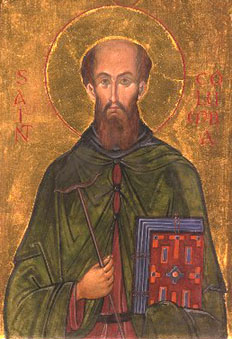
One given from the hagiography is that the saints have some foreknowledge or power over the manner of their deaths. As Naomh Colm Cille said on the day he died (when he was well otherwise), "The Scriptures call this day, the Sabbath, a day of rest, and so it shall be for me." Some of the martyrs are especially powerful. Most embrace death willingly. I cannot believe that Stephen, for instance, did not know asserting the divinity of Christ to the Pharisaic mob would get him stoned.
Most Christians know Paul's remarkable doctrine of baptism, "Because we have died with Christ, we also believe we shall live with him." To some extent, I think this is not just possible in the waters of baptism but through physical death as well. To die with Christ in this latter sense is to take the sins and griefs of the world on your very body.
Last night, I saw that the Patriarch of the West (for that is what John Paul II is most deeply to me, the successor of the Western Emperor in the chair of Peter the Apostle) had a serious urinary infection, which was being successfully treated by antibiotics. The other big news of the day was that Terri Schiavo had starved to death after thirteen days. Today, I read that John Paul has experienced heart failure, nearly the very problem that sent Schiavo into her low brain function but otherwise functioning state. John Paul may be bearing her suffering. My hope is that he will not enter a low brain function state for fifteen years to make the point, but I suspect it is within his powers. From what I can tell, death is near to him and the life of the world to come beckoning in the distance.
ESA(20050401.1)
Most Christians know Paul's remarkable doctrine of baptism, "Because we have died with Christ, we also believe we shall live with him." To some extent, I think this is not just possible in the waters of baptism but through physical death as well. To die with Christ in this latter sense is to take the sins and griefs of the world on your very body.
Last night, I saw that the Patriarch of the West (for that is what John Paul II is most deeply to me, the successor of the Western Emperor in the chair of Peter the Apostle) had a serious urinary infection, which was being successfully treated by antibiotics. The other big news of the day was that Terri Schiavo had starved to death after thirteen days. Today, I read that John Paul has experienced heart failure, nearly the very problem that sent Schiavo into her low brain function but otherwise functioning state. John Paul may be bearing her suffering. My hope is that he will not enter a low brain function state for fifteen years to make the point, but I suspect it is within his powers. From what I can tell, death is near to him and the life of the world to come beckoning in the distance.
ESA(20050401.1)